

As part of Huawei’s commitment to openness and transparency,
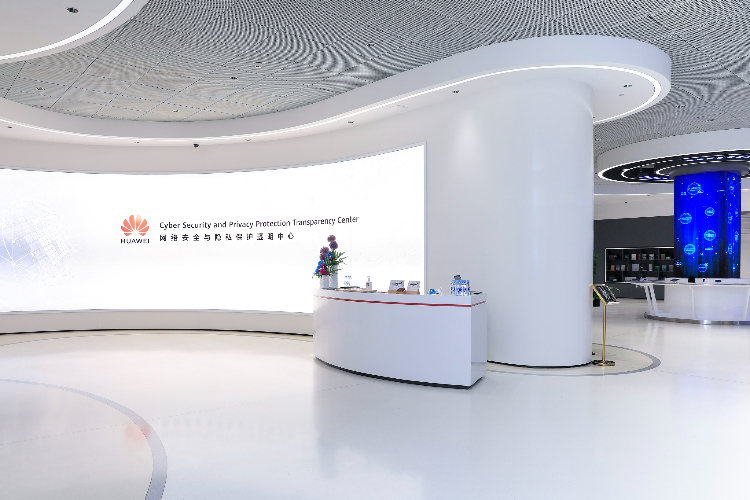
the company inaugurated its largest Global Cyber Security and Privacy
Protection Transparency Center in Dongguan, China today, with representatives
from GSMA, SUSE, the British Standards Institution, and regulators from the UAE
and Indonesia speaking at the opening ceremony. The opening is an indication of
Huawei's willingness to provide governments, customers, and partners around the
world with stronger commitments in cyber security and better support for
cooperation.
Along with the opening of the new center, Huawei also
released its Product Cyber Security Baseline, marking the first time the
company has made its product security baseline framework and management
practices available to the industry as a whole. These actions are part of the
company's broader efforts to engage with customers, suppliers, standards
organizations, and other stakeholders to jointly strengthen cyber security
across the industry.
In its Product Cyber Security baseline, Huawei said its
experience demonstrates that the Baseline is an effective way to manage cyber
security, and it has helped the company to ensure a stellar security record of
Huawei products on customer networks.
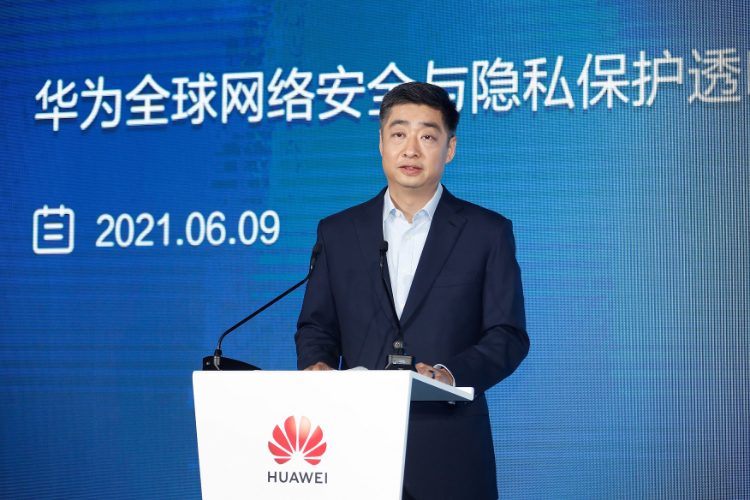
"Cyber security is more important than ever," said
Ken Hu, Huawei's Rotating Chairman, at the opening of the Dongguan center.
"As an industry, we need to work together, share best practices, and build
our collective capabilities in governance, standards, technology, and verification.
We need to give both the general public and regulators a reason to trust in the
security of the products and services they use on a daily basis. Together, we
can strike the right balance between security and development in an
increasingly digital world."
Mr. Hu also highlighted that according to Cybersecurity
Ventures, in 2021, damages from cybercrime might reach $6 trillion dollars.
That's more than the third largest economy in the world. Therefore, “While we
are deepening digitalization across the world, cyber security is becoming more
important than ever before.”
Over the past few
years, industry digitalization and new technologies like 5G and AI have made
cyberspace more complex than ever, compounded by the fact that people have been
spending a greater portion of their lives online throughout the COVID-19
pandemic. These trends have led to a rise in new cyber security risks.
Huawei opened the new
Global Cyber Security and Privacy Protection Transparency Center in Dongguan to
address these issues, providing a platform for industry stakeholders to share
expertise in cyber governance and work on technical solutions together. The
center is designed to demonstrate solutions and share experience, facilitate
communication and joint innovation, and support security testing and
verification. It will be open to regulators, independent third-party testing
organizations, and standards organizations, as well as Huawei customers,
partners, and suppliers.
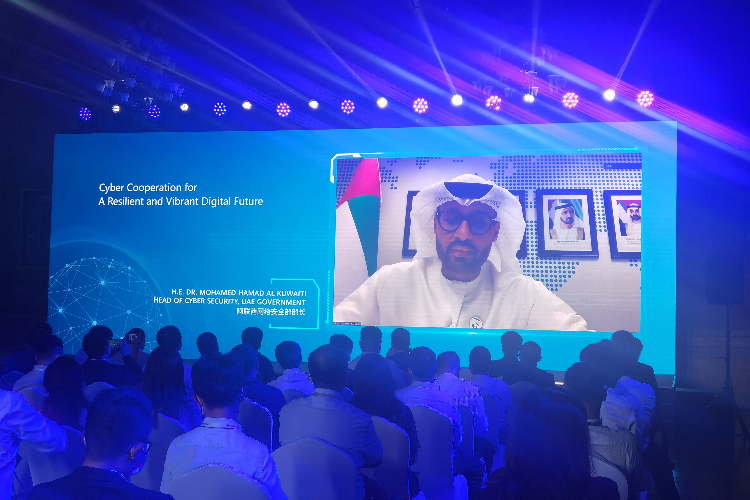
During the opening, H.E. Dr. Mohamed Hamad Al Kuwaiti, Head
of Cyber Security, UAE, delivered a keynote on the importance of cyber
cooperation for a resilient and vibrant digital future. “A public-private
partnership will be critical to build collaboration among private, public and
government entities so as to establish a globally trusted digital trusted oasis
in the UAE,” he said.
To further a unified approach to cyber security in the
telecoms industry, organizations like GSMA and 3GPP have also been working with
industry stakeholders to promote NESAS Security Assurance Specifications and
independent certifications. These baselines have seen wide acceptance in the
industry, and will play an important role in the development and verification
of secure networks.
Mats Granryd, Director General of GSMA, spoke at the opening
of Huawei's new center. "The delivery of existing and new services in the
5G era will rely heavily on the connectivity provided by mobile networks and
will fundamentally depend on the underlying technology being secure and
trusted," he said. "Initiatives such as the GSMA 5G Cybersecurity
Knowledge Base, designed to help stakeholders understand and mitigate network
risks, and NESAS, an industry-wide security assurance framework, are designed
to facilitate improvements in network equipment security levels across the
sector."
In 2020, Huawei received more than 70 certificates related to
cyber security and privacy protection. For example, Huawei is the first 5G and
LTE vendor to pass NESAS evaluation; Huawei has received the CC EAL4+ security
certificate for 5G base stations.
At the event, Huawei also released its Product Cyber Security
Baseline, the culmination of over a decade of experience in product security
management, incorporating a broad range of external regulations, technical
standards, and regulatory requirements. The Baseline, together with Huawei's
other governance mechanisms, helps ensure the quality, security, and
trustworthiness of the company's products. Over the years, Huawei has built
over 1,500 networks that connect more than three billion people across 170
countries and regions. None of these networks have ever experienced a major
security incident. Moreover, Huawei's
annual R&D investment in cyber security and privacy protection accounts for
about 5% of its total R&D expenses.
"This is the first time we've shared our security
baseline framework with the entire industry, not just core suppliers,"
said Sean Yang, Director of Huawei's Global Cyber Security and Privacy
Protection Office. "We want to invite all stakeholders, including
customers, regulators, standards organizations, technology providers, and
testing organizations, to join us in discussing and working on cyber security
baselines. Together, we can continuously improve product security across the
industry."
At present, the industry still lacks a standards-based,
coordinated approach, especially when it comes to governance, technical
capabilities, certification, and collaboration.
To that end, Huawei is committed to planning and developing
training courses through its Cyber Security and Privacy Protection Knowledge
Center. 204 courses have been published in the Knowledge Center so far,
covering cybersecurity and privacy protection insights, process development,
verification and testing, and privacy protection, and with a total of over
200,000 course completions.
"Cybersecurity risk is a shared responsibility,"
concluded Ken Hu in his opening remarks. "Governments, standards organizations,
and technology providers need to work closer together to develop a unified
understanding of cyber security challenges. This must be an international
effort. We need to set shared goals, align responsibilities, and work together
to build a trustworthy digital environment that meets the challenges of today
and tomorrow."