





Operational Technology (OT) — the hardware and software that monitors
or controls equipment, assets, and processes within industrial environments,
has become a top target for rapidly growing cyber attacks.
According to
the Global IoT/ICS Risk Report, 71% of networks have outdated operating systems
that are no longer receiving security updates, 64% are using insecure
passwords, and 66% are not updated with the latest antivirus updates.
In wake of the same, The Gulf Cooperation
Council Interconnection Authority (GCCIA) hosted a two-day forum on cyber
security strategies. The event brought together some of the best minds in the
industry and stressed the importance of network monitoring and robust physical security
to effectively secure OT systems, as well as shed light on the latest
strategies, tools, and frameworks to secure industrial control systems (ICS) against
cyber attacks.
Eng. Ahmed Al Ebrahim, GCCIA CEO, said “It
was great connecting with experts from the industry during the course of this forum.
Cyber-security is a pertinent issue, and comprehensive framework and guidelines
are essential to minimize system security risk. This forum was an effort to
bring to stage latest strategies and tools to secure ICS against cyber attacks,
as well as identify a baseline set of controls to improve the cyber-security of
a critical infrastructure. I would like to take this opportunity and extend
gratitude to all the participants and the speakers for coming together and
making this forum a grand success.”
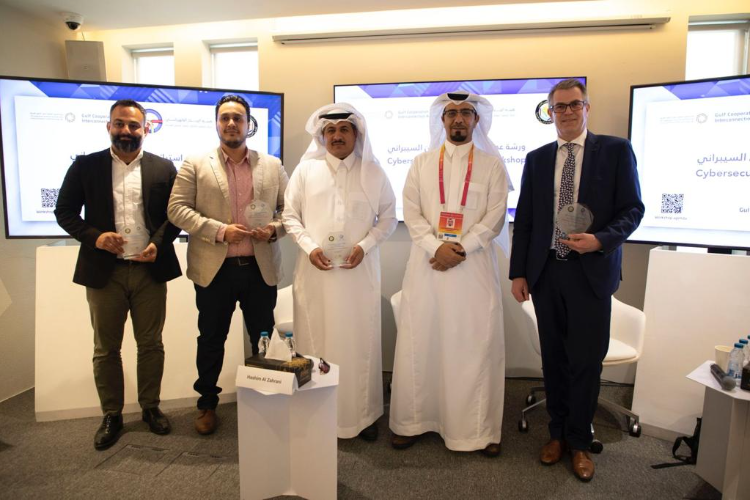
Dr Nasser Al Shahrani presented the
panelists and key speakers at the forum appreciation trophies for their
invaluable insights and discussions.
Dr Ahmed Amin from Cyber-force, one of
the key speakers at the event stressed the importance of backups and stated, “In
their response to cyber-attacks, organizations may immediately launch a backup
to recover data, then they may be hit again and not have a mitigation plan.
Constant backups are essential to disaster recovery.”
Bas Kruimer, Business Director, Digital
System Operations, DNV, also supported the importance of backups and how
essential it is for recovery of data. Similarly, Van Dragnev, Cyber Security
Principal Technical Lead Europe, EPRI, shared examples of opportunities
for automation
in threat mitigation against various forms of cyber attacks,
while Dr Ahmed Amin, PhD Researcher, Cyber-force, focused on the importance of threat
contextualization and threat prioritization as critical factors to an effective
cyber-security response. Alternatively, Naveed Hamid, Dragos presented a
comprehensive guide to building a threat-informed defense to protect critical
infrastructure.
In summary, the forum emphasized on cyber-security
for the Utilities – OT and IT industries. The experts presented the IED
Management Model and highlighted the importance of applying cyber security controls
to legacy systems. They also highlighted the importance building a
threat-informed defense to protect critical infrastructure, emphasized on incident
responses in OT and focused on how to combat threats using the Security
Orchestration Automated Response Methodology.