
Masdar City, a
ground-breaking sustainable urban community in Abu Dhabi, and Huawei, a leading
global provider of information and communications technology infrastructure,
have joined forces through a Memorandum of Understanding that will help power
the UAE’s journey to net zero.
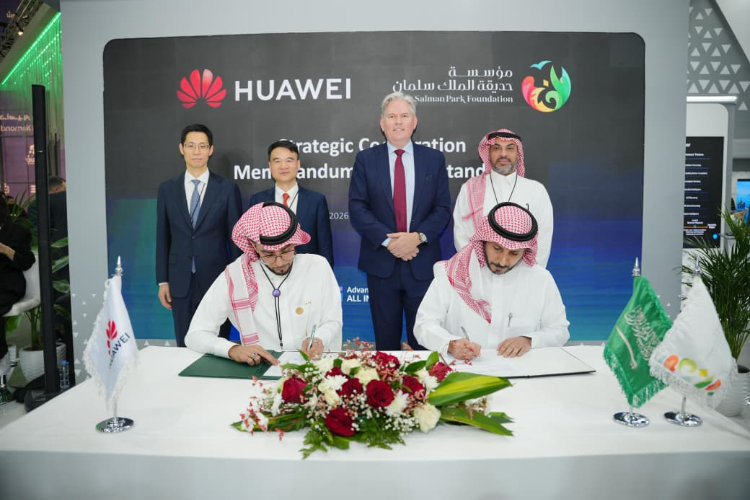
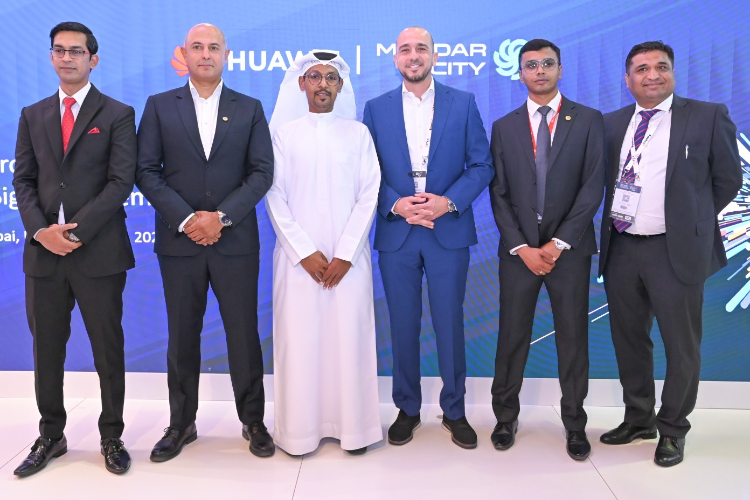
The agreement,
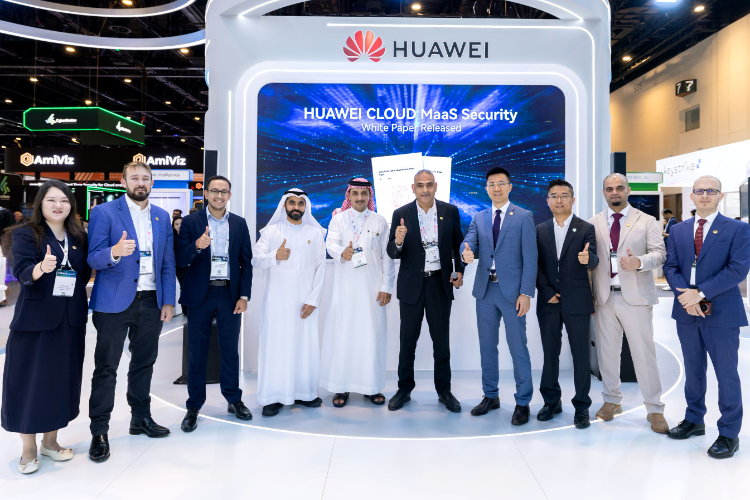
signed on October 17 at GITEX GLOBAL 2023 by key Masdar City and Huawei leaders,
will lead to knowledge-sharing and capacity-building in net zero development, help
reduce the carbon footprint of Masdar City’s information and communications
technology (ICT) infrastructure, and promote the adoption of carbon-conscious
ICT through Huawei’s Net Zero Campus Framework. The framework, released earlier
this year, is designed to help organizations reduce the energy demand of ICT
systems and operations while switching to clean energy.
Masdar City,
already home to one of the largest clusters of LEED Platinum buildings in the
world, has three net zero energy buildings currently under construction, the
first of which will be completed in October 2023. Huawei is home to several
low-carbon campuses and is creating new technologies to support sustainability
as one of their strategic priorities.
“Masdar City already
develops the most high-performing, energy-efficient buildings in the region,”
said Mohamed Al Breiki, Masdar City’s executive director of sustainable real
estate. “Optimizing ICT systems is a vital step in reducing our energy demand
even further and cutting tech-related carbon emissions. This is yet another way
for us to help lead the way for other cities who want to chart a course to net-zero.”
“We are delighted to announce our partnership
with Masdar City to accelerate the UAE's journey to net zero,” said Safder
Nazir, Senior Vice President, Public Sector, Huawei Middle East and Central
Asia. “Through this MOU, we aim to empower knowledge-sharing, promote the drive
toward carbon-conscious ICT to reduce tech-related carbon emissions, and
promote Huawei's Net Zero Campus Framework. We recognize that technological
innovation plays a crucial role in sustainable development, and this
collaboration with Masdar City will set a benchmark for the cities and campuses
of the future.”
In addition to
optimizing existing ICT systems at Masdar City, Huawei will advise on Masdar
City’s upcoming Command and Control Center, which will feed data related to
energy, water, and waste management in all Masdar City-owned buildings to a
central location. This will allow facilities managers to monitor and improve
building performance in real-time.
Masdar City will look
for opportunities to amplify Huawei’s Net Zero Campus Framework, launched
earlier this year to support organizations that wish to decarbonize. The Huawei
Net Zero Campus Framework recommends a stepwise approach towards a net zero
campus. This could begin with addressing campus operations, along with net-zero
energy development.
A smart campus
solution supports a collaborative work environment, while a net zero energy
campus implements key energy initiatives such as reducing energy consumption,
generating energy onsite, and actively managing energy consumption and energy
trading. The net zero-carbon campus strives for a net zero balance between the
carbon emitted into the atmosphere and the carbon removed from it.
Al Breiki signed
the MOU on behalf of Masdar City, while Nazir signed the agreement for Huawei.
“We have always
known that technological innovation helps drive sustainable development,” said
Al Breiki. “This new partnership will be a powerful enabler for
decarbonization. We look forward to setting an even higher benchmark for how
cities of the future will operate.”