

Huawei has
unveiled its Net Zero Campus Framework, a comprehensive guide for campuses to develop
a roadmap to net zero carbon emissions by leveraging Huawei's expertise in
campus solutions. The framework helps campuses assess their current situation
and plan their transition to clean energy sources while meeting the growing
demand for digital services and data processing.
The Net Zero
Campus Framework helps advance sustainable development, a major priority for
regional governments. Over 130 countries,
covering 83% of global emissions, have acknowledged the need for urgent action
to combat climate change and its impacts. These include all the countries in
the Middle East and Central Asia region.
The framework was
introduced in a white paper developed with GlobalData, a leading data analytics
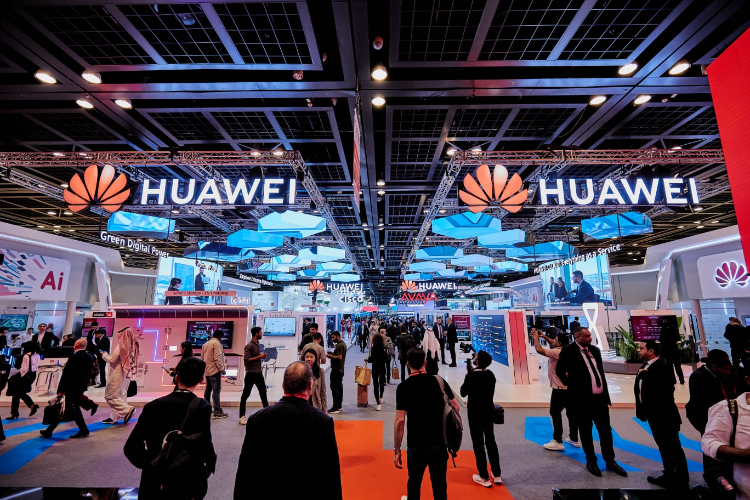
and consulting company and was released during the Huawei Middle East and
Central Asia Tech Carnival 2023 in Almaty, Kazakhstan. The event's theme was
'Leading Digital Infrastructure for New Value Together'. At the event, Huawei
showcased its leading digital infrastructure for creating 'New Value Together'
with its government and enterprise customers, partners, universities, analysts
and the media.
Safder Nazir, Senior Vice President, Public Sector at
Huawei Middle East and Central Asia, said,
"Climate change is the critical challenge facing humanity. To
facilitate fundamental change, national and local governments must actively address
both the energy and information revolutions that converge into what is known as
the fifth industrial revolution (5IR). As campuses form the building blocks of
cities, the Huawei Net Zero Campus Framework helps campuses define their action
roadmap toward net zero. But that is only the beginning - net zero campuses
will provide islands of net zero, spreading and combining to provide net zero
cities, enabling countries to better achieve their stated targets for reaching
a net zero future."
A net zero energy
campus is a campus that produces as much energy as it consumes from renewable
sources, such as solar, wind or biomass, typically measured over a year. Net
zero campuses can reduce energy costs, improve space efficiency, enhance
service experience and security, and support innovative industry development.
They can also contribute to building environmentally conscious cities and
achieving national and global climate goals.
Mohamed Al Breiki, Executive Director of Sustainable
Real Estate at Masdar City, said,
"The white paper presented here provides a platform for all sectors of
society to address sustainable urban development
needs. We hope that Masdar City, and all we have learned while creating it,
will act as a "green print" for other cities that want to be part of
the solution to climate change. We will continue to help create a future where
net zero is the norm rather than the exception and will never stop striving for
better – the future depends on it."
The Huawei Net Zero Campus Framework
recommends a stepwise approach towards a net zero campus. This could begin with
a combination of smart campus – i.e., addressing campus operations, along with
net zero energy. A smart campus solution delivers an integrated experience while
supporting a collaborative work environment, while the net zero energy campus
implements key energy initiatives. These include reducing energy consumption,
generating energy onsite, and actively managing energy consumption and energy
trading.
Finally, there is
the net zero carbon campus which strives to achieve a balance between the
carbon emitted into the atmosphere and the carbon removed from it. This balance
– or net zero – will happen when the amount of carbon we add to the atmosphere
is no more than the amount removed.
In June 2022,
Huawei was named a World Summit on the Information Society (WSIS) 2022 champion
for its intelligent Net Zero Campus solution at the Yancheng Campus in China.
The WSIS event was co-organized by the ITU, UNESCO, and UNDP.
Huawei's vision
and mission is to bring digital to every person, home and organization for a
fully connected, intelligent world. In pursuit of this objective, Huawei has
developed its sustainability strategy, positioning sustainability as one of its
priorities and incorporating it into its overall development strategy.
With this in
mind, Huawei solutions have helped customers generate over 443 billion kWh of
sustainable power and save 13.6 billion kWh of electricity, reducing 210
million tons of carbon dioxide emissions, equivalent to planting 290 million
trees.
"Huawei
remains committed to supporting the net zero policies and emissions reductions
strategies that governments in the ME & CA countries are pursuing. Working
closely with our regional and global partners, we are helping industries and
countries pursue their decarbonization goals and protect the environment for
future generations," Nazir concluded.
The full
whitepaper can be downloaded here
For more
information about the Huawei Middle East & Central Asia Tech Carnival 2023,
please visit: https://e.huawei.com/topic/2023-ae-meca-tech-carnival/ae/