






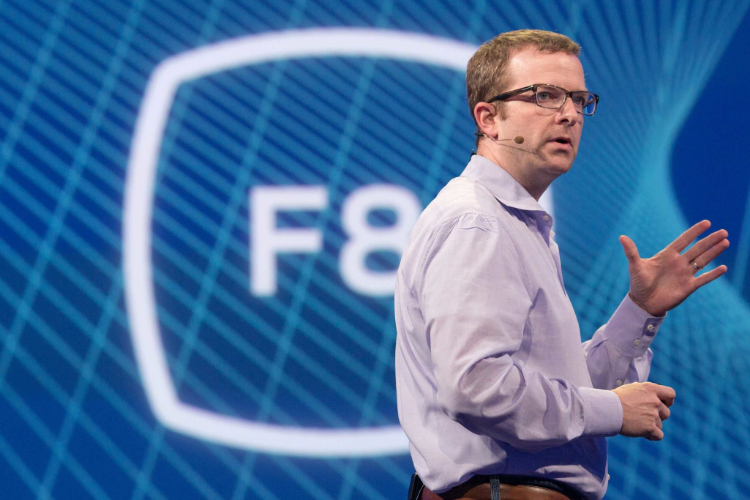

Mike Schroepfer, CTO of Facebook
(pictured), used the company’s F8 conference to discuss its work to address
negative use of its various apps and services, citing AI as a key enabler in
tackling its challenges.
The comments come as the company
faces a raft of criticism over numerous issues, from privacy to hate speech.
Earlier this week, Mark Zuckerberg, CEO, discussed the company’s work to
improve its privacy credentials.
In a keynote session, the CTO
noted the lessons of recent years have “made us realise the deep responsibility
we have to understand not just all the amazing good that can come from new
technology, but the bad, the unintended consequences, the ways in which people
may abuse those new technologies”.
Among the issues the company has
been criticised for failing to act on are election interference, misinformation
and hate speech.
“There are not simple answers to
these complex problems. Instead what we’ve decided is we have to dedicate
ourselves to getting into the details, to working these problems, day after
day, month after month, year after year,” he said.
Action
In order to identify the
potential for harm in new products, whether unintentional or through “bad
actors”, the company is embedding specialists within product teams, in order to
understand the specific nuances.
For example, the core Facebook
app has a Groups feature which is not replicated elsewhere, while Instagram is
home to a number of “influencers” who hold significant sway. And VR also
presents a “unique set of challenges when dealing with social experiences”, the
CTO said.
“When two people are together in
a virtual world, the sense of physical safety and physical comfort, how close
is someone standing next to me in this virtual world, becomes a paramount issue
and something the Oculus team has focused on deeply.”
Facebook is also engaging with
external specialists in areas covering security; privacy; misinformation;
inclusion; accessibility; and content policy, “before, during and after product
development”.
“The other lesson we’ve learned
is that we can’t, and we shouldn’t, do this alone.”
Optimised
Schroepfer said to make the best
use of technology to address the challenges it is facing, it is looking to
centralised platforms which span the range of issues it is focusing on, to
concentrate its investments and apply solutions across problem areas and
product teams.
“A steady investment in AI
technology has caused us to make steady progress in attacking each of these
areas,” he said. “We’ve seen a number of breakthroughs in basic technology that
are breaking us out of this current state.”
He acknowleded there is no
perfect solution, but said “we have to keep going”.
“And this is where I think
optimism about the future is really important. Because where we are now, when
we stare down some of these problems and you look at the magnitude of them, the
difficulty, the breadth, the real world impact it has, it’s really easy to lose
hope, to want to pack up and go home. But we can’t do that: we’re here to bring
a better future for people through technology.”

