

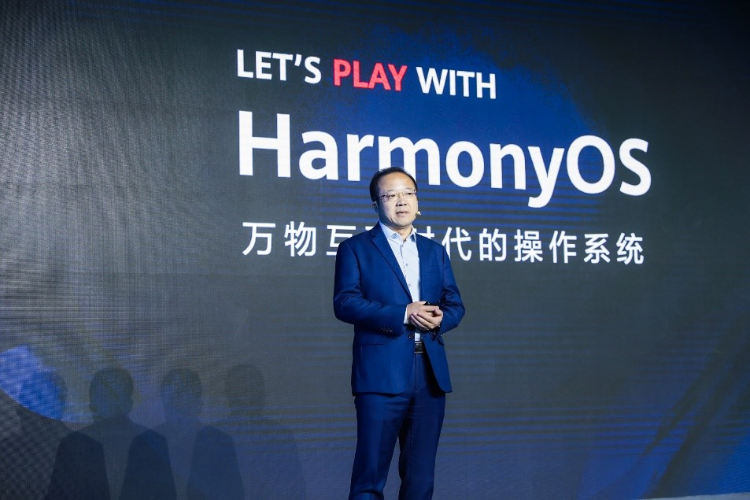

HarmonyOS 2.0 Developer Beta for
Smartphones was officially released at HUAWEI Developer Day Beijing 2020,
representing a milestone in the construction of the all-encompassing HarmonyOS
ecosystem. Smartphone app developers with interest in the 2.0 beta can apply
for it on the HUAWEI Developer official website.
Comprehensive HarmonyOS system
capabilities, a multitude of APIs, and powerful tools such as the optimized
DevEco Studio simulator, have all been made publicly available, facilitating
efficient HarmonyOS-compatible smartphone app development. Huawei hopes to
welcome more partners to the ecosystem, and give users access to the full range
of benefits offered by Seamless AI Life, with smart services that interact
with, entertain and educate them in new and profound ways, at home, in the gym
and in the office, on the go and on the road.
Wang Chenglu, President of
Huawei's Consumer Business Group Software Engineering Department, remarked,
"HarmonyOS is a true milestone, as it has redefined how people and devices
interact with each other in every facet of daily life. Devices and services are
no longer limited to specific life scenarios, now that users can freely
customize how their devices work to account for any setting. HarmonyOS will
create 'super devices' that come with more enriching apps than ever, as well as
life-altering 'super services'."
Unparalleled user experience, made possible by
"super devices" and seamless services
A new era is upon us, brought
about by the Internet of Everything and powered by the rapid growth of 5G, AI
and IoT technologies. The past decade has been dominated by the rise of the
smartphone and mobile internet, but over the next decade, no single device
offers similar breakthrough potential. Instead, it is multi-device connections
that will pave the way to the smart services of tomorrow.
HarmonyOS and its underlying
distributed technology are designed for this futuristic Internet of Everything
paradigm. By helping create "super devices", which are formed by
pooling software and hardware resources from previously physically-independent
devices, the system has been making the lofty ambitions in Seamless AI Life a
full-blown reality. HarmonyOS helps ensure that all devices are responsive to
the user's every whim, and equipped to handle any conceivable usage scenario.
A good example of this principle
in action is how HarmonyOS leverages phone-watch collaboration to provide for
next-level smart travel solutions. Ride hailing has been made hands-free, with
important information such as the taxi's real-time location and license plate
number, displayed on the watch screen. Likewise, online shopping will soon be
easier than ever, now that group-buyers will be able to view eligible items in
other buyers' shopping carts, and make informed decisions with real-time
post-discount pricing – or even initiate MeeTime calls to share screens and
discuss purchasing strategies.
HarmonyOS encourages all
developers to release their imagination and come up with promising ideas on how
to create Seamless AI Life services for all users. Therefore it's no small
wonder that over 120 mainstream app builders, including JD.com, China UnionPay,
Youku Video and iFlytek, have opted to make HarmonyOS their system of choice.
Comprehensive support for
developers, facilitating multi-device deployment through one-time development
Today's vast array of IoT
devices share little in common, as they can be subdivided into different device
types and operating systems. This reality has hindered traditional app
development, as apps needed be adapted to fit all of the different screen sizes
and systems prior to release. Huawei has made IoT fragmentation a thing of the
past, by opening all of HarmonyOS's frameworks and platform toolchains to
developers.
Over 15,000 APIs have now been
made available, including distributed system services, software and hardware
abilities. In doing so, HarmonyOS aims to help create innovative and
competitive apps that are compatible with all device types and oriented toward
all usage scenarios, with as much ease as experienced in the independent-device
app development era. The distributed UI framework fits all screen sizes, and
facilitates hassle-free deployment with substantially increased efficiency. The
new and improved DevEco Studio 2.0 can realize real-time preview and
distributed debugging, which are also ideal for boosting development
efficiency.
More than 100,000 developers
have joined the HarmonyOS ecosystem, thanks in large part to expert-level
support, a wealth of enriching training courses and easy-to-access materials,
and open-minded developer communities. The kickoff of the HarmonyOS Developer
Innovation Contest, which offers 1.5 million Chinese yuan in prizes and
mentorship resources from 20 prominent industry professionals, hopes to drive
further engagement among the talented developers that have made HarmonyOS their
professional home.
Groundbreaking HarmonyOS
technologies, driving the industry forward and unlocking the boundless
possibility of Seamless AI Life
HarmonyOS will also transform
the business of hardware vendors, by helping them turn products into services.
Software innovation will be channeled to bring about differentiated and
flexible hardware usage. Hardware resources from all connected devices will be
pooled, to enable partners to extract more value by selling services on an
ongoing basis, rather than being limited to the one-time product sale. Enticed
by this promising new model, more than 20 hardware vendors have become a part
of the HarmonyOS ecosystem.
Multi-device interconnectivity
has likewise been made seamless, from the very bottom layer, where the
connection is unaffected by any software or hardware differences. The user can,
for instance, simply tap their phone against a home appliance to establish an
instant connection, and have the device information visualized on the phone
screen. Connected appliances will also be able to "tell" their user
how they're working, laying the foundation for genuine smart homes of the
future.
HarmonyOS will be made
open-source for a greater range of devices in the near future. The HUAWEI
Developer Day 2020 event series will make stops in more major cities, including
Shanghai and Guangzhou, to provide aspiring developers with invigorating
discussions on cutting-edge technologies and applications.