

By: Dr. Wathiq Mansoor, Professor, Chair of Electrical Engineering, Director of Entrepreneurship and Innovation Free Zone, University of Dubai
The
UAE was recently recognized for its leadership within the ICT sector by the Global
Innovation Index Report 2020. The country was placed first in the Arab world
for its ICT Pillar, ICT Access indicator, and ICT Use Indicator[1].
Achieving this tremendous feat is definitely commendable, but it's essential to
recognize that this resulted from years of hard work. The seeds of this dream
were sown back in 2014 when HH Sheikh Mohammed bin Rashid Al Maktoum, Vice
President and Prime Minister of the UAE, and the Ruler of Dubai, announced the
ICT Strategy 2021.
Over
recent years, the UAE proved to be a forward-thinking, technology-driven
country by leading the charge of inspiring innovation, applying advanced
technologies, and digitalization across multiple industries. In addition to the
rapid digitalization of government departments, the country leveraged new
technologies like 5G, cloud computing, Artificial Intelligence (AI), and
blockchain to build its digital economy. In his recent address, HH Sheikh Mohammad
stressed the need to increase the digital sector's contribution to the national
economy and promote smart infrastructure across the nation. He highlighted how the
digital economy could be a key catalyst for economic growth across new sectors
and improve our nation's competitiveness. In 2019, the digital economy
contributed 4.3 percent to the country's GDP, and the UAE is keen to prioritize
further growth of the sector[2].
One
of the critical technologies that will empower the UAE's digital economy is AI.
This technology can be applied to almost every industry in the UAE, from automotive,
healthcare, education, banking, or manufacturing. AI's application across sectors
can be further enriched by integration with other technologies like the
Internet of Things (IoT), cloud computing, Augmented Reality (AR), and big
data. These technologies can work together seamlessly to create the correct
operating infrastructure for AI. The
application of AI can generate incredible business and social value for our society
and unleash our digital economy's full potential. For instance, AI can be
leveraged within the healthcare sector to provide an accurate assessment of
patients' reports and scans, reducing the burden on manual labor and human
error.
Recognizing
the immense untapped potential of AI, the UAE was the first country in the
world to announce the appointment of a Minister of AI. In another world's
first, the country announced an AI strategy that aimed to enhance government
performance and promote this technology's innovative applications across
multiple domains. AI can play a fundamental role in strengthening the UAE's
digital economy, but one important factor needs to be addressed to fulfill the
UAE's ambition – talent.
To
develop future ICT leaders of the UAE, our world-class education institutions
need to leverage partnerships with global technology leaders. For instance, the
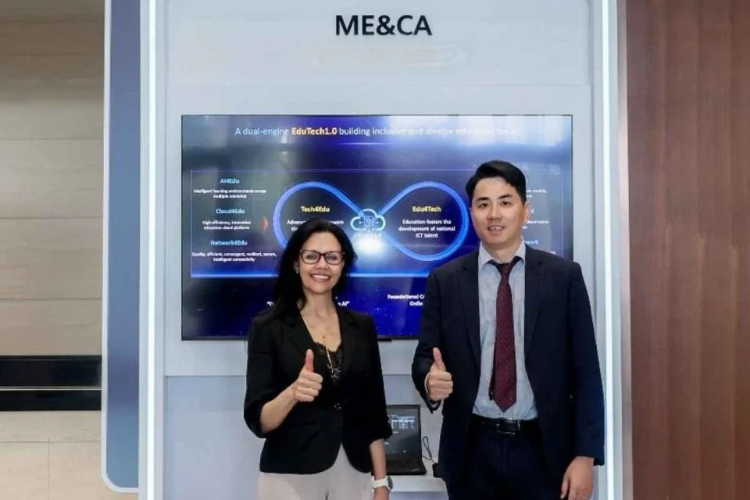
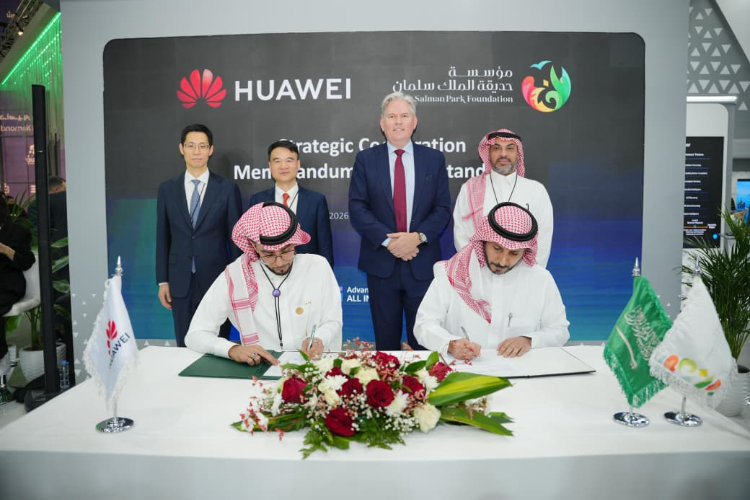
University of Dubai has a strategic partnership with Huawei to nurture and
equip our ICT students with the necessary knowledge and skills to apply
technology across different industries successfully. Our collaboration with a
global ICT leader like Huawei enables our students to gain advanced industry
knowledge, learn best practices from industry practitioners, and, most
importantly, learn first-hand the practical applications of technologies like
AI and cloud computing. This would help them be better prepared to join the ICT
workforce and contribute to the UAE's digital economy in the future.
With
the UAE being a hub of technology innovation, we have easy access to global
technology giants, and we must take advantage of this. Partnerships between
government entities, academia, and private sector technology enterprises will
help us nurture the UAE's ICT talent ecosystem. This will ultimately help us
build the future ICT leaders who can help the UAE realize its ambitions of a booming
digital economy.